
Create and manage an interest
This article explains how to create a new interest, configure its visibility and labels, and manage your interests over time. Getting this right from the start makes segmentation, automation, and contact preference management much smoother.
Prerequisites
- You need an active Flexmail account.
- To create private interests, you need a Pro subscription or higher.
- Decide on your interest names before you start. Internal names are used in segments, imports, and workflows, so consistency matters.
Create an interest
- Go to Contacts, then Interests.
- Click Add interest.
- Enter an internal name for the interest. This name is only visible to you, it's how you identify the interest when building segments, setting up workflows, or importing contacts. Choose something clear and consistent.
-
Click Create interest.
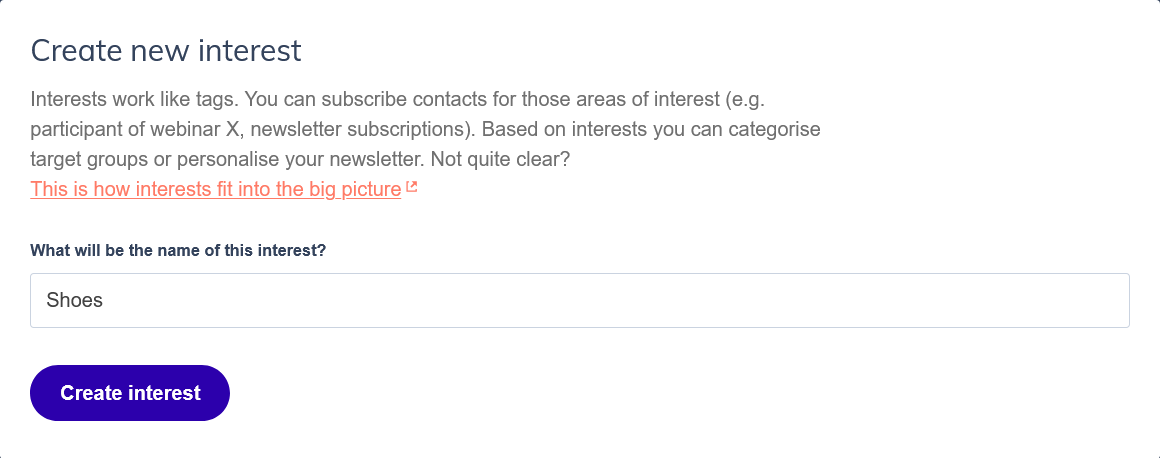
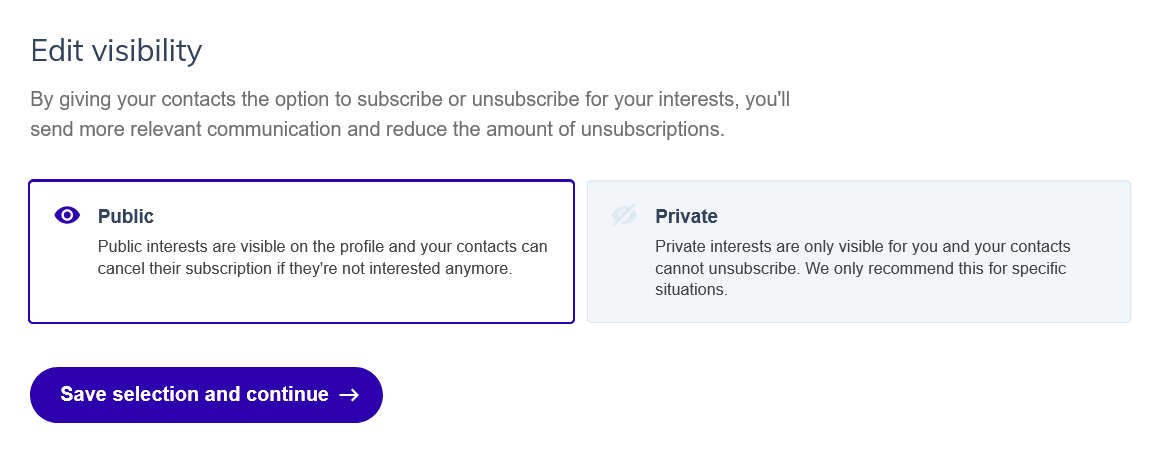
- Choose the visibility: Public or Private. Public interests are visible to contacts on their profile page, they can subscribe and unsubscribe themselves. Private interests are only visible to you; contacts cannot see or manage them. Private interests require Pro or higher.
-
Click Save choice and continue.
- Add a label and optionally a description. The label is the name contacts will see on their profile page and in opt-in forms (for public interests). The description helps contacts understand what they're signing up for, for example: "Our monthly newsletter with tips and news". A description is optional but recommended for public interests.
- Click Save interest.
- If you send in multiple languages, add translations of the label and description for each language. You only create the interest once, Flexmail shows the correct language version to each contact automatically.

Support tip Write a clear description for public interests. When contacts are deciding which interests to subscribe to, the description is the main thing that helps them choose. "Weekly product updates" is much more useful than just "Products".
Manage your interests
Go to Contacts, then Interests to see all your interests. The overview shows each interest's name, how many contacts are currently subscribed, its visibility, and any warnings such as missing translations.

Edit an interest
Click the name of an interest to open its settings. You can update the name, label, description, and translations at any time. Changing the internal name does not affect contacts or segments, it only changes what you see in your account.
View contacts subscribed to an interest
To see which contacts are subscribed to a specific interest, create a segment with the condition Interest > is subscribed to > [interest name]. From that segment, you can also export the contact list.
Delete an interest
Deleting an interest removes it from all contacts and from all places it's used, including segments, workflows, and opt-in forms. This cannot be undone.
Attention Deleting an interest removes it from all contacts in your account immediately and permanently. Before deleting, check whether the interest is used in any active campaigns, workflows, or opt-in forms. If you're unsure, rename or archive it instead.
Pro tips
- Use a consistent naming convention for internal names from the start. For example: "NL_Newsletter", "FR_Newsletter", "Promotions_BE". This makes interests much easier to manage as your account grows.
- Add translations even if you currently only send in one language. If you add a second language later, untranslated interests will show the fallback name, which may not be meaningful to contacts.
- If you rename an interest, update any documentation or process notes that reference the old name. Flexmail handles the change internally, but your team should know about it.
Common mistakes to avoid
- Skipping the description for public interests. Contacts decide whether to subscribe based largely on the description. A missing or vague description leads to fewer subscriptions and less accurate preference data.
- Deleting an interest that's still used in a workflow or segment. The interest is removed from those places immediately. Test for dependencies before deleting.
- Using the contact's language-visible label as the internal name. The internal name is for your own use. Keep it practical and consistent rather than trying to make it readable for contacts.
- Creating multiple interests with similar names when one would do. For example, "Newsletter", "Newsletter subscribers", and "Monthly newsletter" might all represent the same thing. Consolidate before you build segments on them.
GDPR considerations
GDPR Public interests are a legitimate way to manage marketing consent by content category. Make sure the label and description of each public interest accurately describe what the contact is subscribing to. Misleading descriptions could constitute a consent management issue. Private interests used for behavioural tagging should be covered in your privacy policy as part of your legitimate interest grounds for processing.
Next steps
- See "Use interests" to learn all the ways to assign interests to contacts, via forms, import, link tracking, workflows, and manually.
- See "Get started with interests" for a guided setup process from scratch.
- Once interests are created, build segments based on them in Contacts > Segments.